
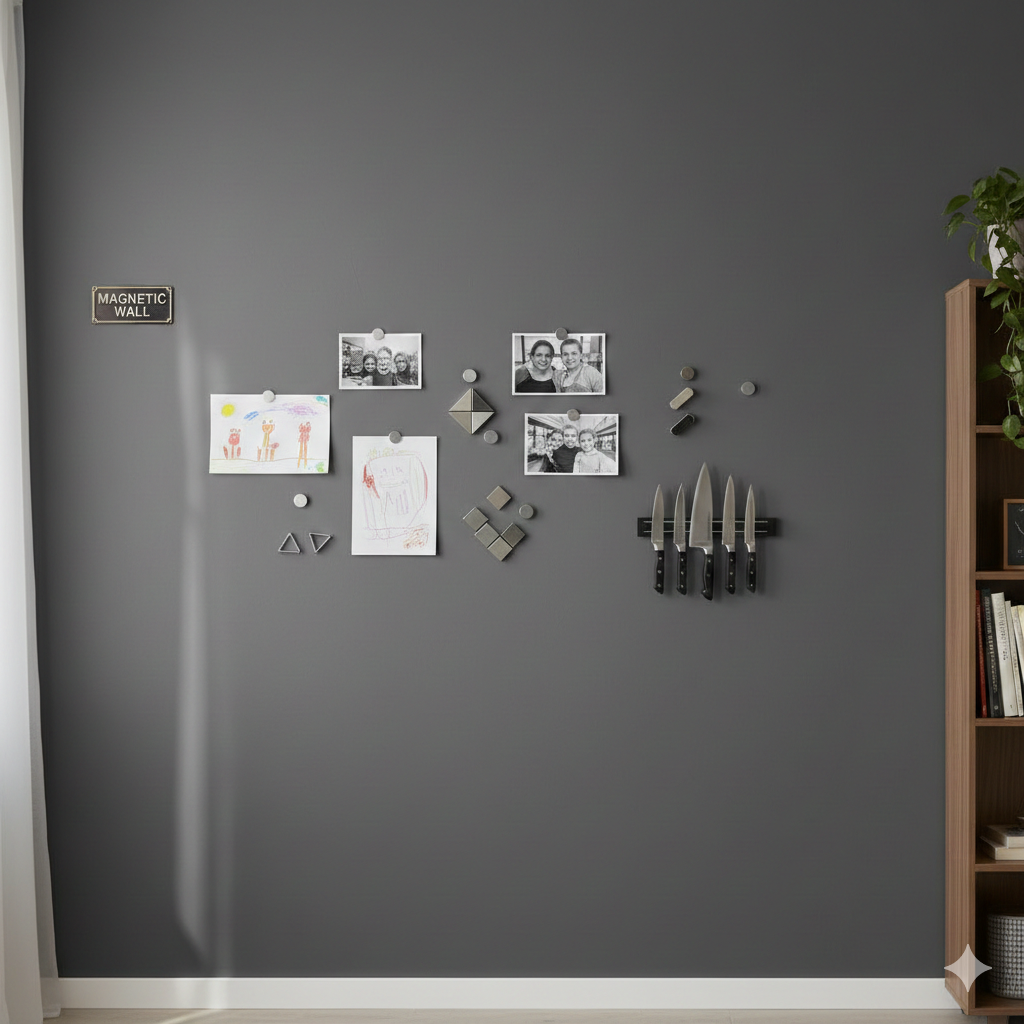
Modern interior design is no longer just about colors and furniture. People now want smart, functional, and creative solutions for their walls. One such innovation is magnetic paint for walls, a special type of coating that turns ordinary surfaces into magnetic areas. This concept is becoming popular in homes, offices, schools, and creative spaces because it adds both style and practicality.
In this detailed guide, you will learn what this paint is, how it works, where it can be used, and why it is gaining attention. The information is written in a simple way so anyone can understand it, even without technical knowledge.
What Is Magnetic Paint?
Magnetic paint is a specially formulated coating that contains tiny iron particles. When applied to a wall, it creates a surface that can hold magnets. Once the paint dries, magnets can be attached directly to the wall without nails, hooks, or drilling.
This paint looks like normal wall paint after drying and can be covered with regular paint in any color. That makes it both functional and visually appealing.
How Does Magnetic Paint Work?
The working principle is very simple. The iron particles inside the paint create a magnetic field. When magnets come in contact with the painted surface, they stick due to magnetic attraction.
Important things to understand about how it works:
-
The strength depends on the number of paint coats
-
Stronger magnets give better holding power
-
Thicker application improves performance
-
It does not damage walls like drilling does
After application, the wall behaves like a magnetic board while still looking clean and modern.
Key Benefits of Using Magnetic Paint
Using magnetic paint offers many advantages beyond decoration. Below are some of the main benefits that make it a smart choice.
1. Damage-Free Wall Use
You can attach notes, photos, artwork, or tools without drilling holes or using adhesive tapes.
2. Clean and Modern Look
There are no visible hooks or pins. The wall remains smooth and stylish.
3. Flexible and Reusable
You can move items around anytime without leaving marks or residue.
4. Child-Friendly and Safe
Perfect for kids’ rooms and classrooms where pinboards may be unsafe.
5. Customizable Design
It can be painted over with any color, allowing it to blend with interior themes.
Popular Uses of Magnetic Paint for Walls
Magnetic paint is used in many spaces due to its versatility. Below are some common applications.
Home Applications
-
Kitchen walls for notes and recipes
-
Kids’ rooms for learning charts and artwork
-
Home offices for planning boards
-
Living rooms for creative displays
Office and Workspaces
-
Brainstorming walls
-
Project planning boards
-
Notice boards
-
Presentation areas
Schools and Learning Centers
-
Interactive learning walls
-
Displaying student work
-
Teaching aids and charts
These uses show how magnetic paint for walls combines creativity with daily functionality.
Where Magnetic Paint Works Best
Magnetic paint works well on smooth, solid surfaces. Choosing the right surface ensures better results.
Best surfaces include:
-
Drywall
-
Plaster walls
-
Wood panels
-
Cemented walls
Surfaces to avoid:
-
Uneven walls
-
Soft wallpapers
-
Moist or damp areas
Proper surface preparation improves durability and magnetic strength.
Step-by-Step Guide to Applying Magnetic Paint
Applying magnetic paint is not difficult, but it does require patience and correct steps.
Step 1: Prepare the Surface
Clean the wall and remove dust, grease, or loose paint. Smooth surfaces work best.
Step 2: Stir the Paint Well
Iron particles settle at the bottom. Mix thoroughly before and during application.
Step 3: Apply Multiple Coats
Use a roller or brush and apply at least three to four coats for better magnet strength.
Step 4: Allow Proper Drying
Let each coat dry completely before applying the next one.
Step 5: Paint Over if Needed
Once dry, you can paint over it with your chosen wall color.
Following these steps ensures long-lasting and effective results.
Choosing the Right Magnets
Not all magnets work the same way. Stronger magnets perform better on painted surfaces.
Tips for selecting magnets:
-
Use neodymium or heavy-duty magnets
-
Avoid lightweight decorative magnets
-
Test magnet strength before final use
The right magnet choice improves holding power and usability.
Maintenance and Care Tips
Magnetic paint surfaces require minimal maintenance, but a few simple practices help extend their life.
-
Clean with a dry or slightly damp cloth
-
Avoid harsh chemicals
-
Do not scratch the surface with sharp objects
-
Repaint top layers if needed after years of use
Proper care keeps the wall functional and attractive.
Is Magnetic Paint Safe to Use?
Yes, magnetic paint is safe when used correctly. Most quality brands are non-toxic and suitable for indoor use.
Safety points to consider:
-
Use in well-ventilated areas during application
-
Keep paint away from children while wet
-
Follow manufacturer instructions carefully
Once dry, it is completely safe for everyday use.
Common Myths About Magnetic Paint
There are some misconceptions that often confuse people.
-
It does not attract metal objects automatically
-
It does not damage electronics
-
It does not replace strong industrial magnets
-
It works best with proper coats and magnets
Understanding these facts helps set realistic expectations.
Final Thoughts
Magnetic paint for walls is a smart and creative solution for modern spaces. It offers flexibility, cleanliness, and functionality without compromising interior design. Whether you want an interactive wall for learning, an organized workspace, or a damage-free way to display items, this paint delivers practical value.
With proper application and the right magnets, it transforms ordinary walls into useful surfaces that adapt to your lifestyle. As interior trends continue to evolve, this innovative wall solution is proving to be both useful and timeless.

 English
 Arabic
 French
 Spanish
 Portuguese
 Deutsch
 Turkish
 Dutch
Dutch
 Italiano
 Russian
 Romaian
 Greek
Greek