
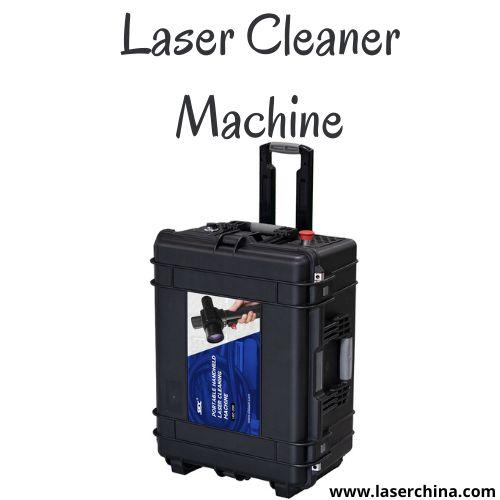
The laser cleaner machine has become a central technology in modern industrial cleaning, offering a refined and controlled approach to surface preparation, maintenance, and restoration. As industries demand higher precision, cleaner processes, and reduced reliance on consumables, this equipment has positioned itself as a practical solution across manufacturing, automotive, aerospace, shipbuilding, electronics, mold making, and heritage restoration sectors. Its growing adoption reflects a shift toward advanced cleaning methods that align with strict quality standards and evolving production environments.
At its core, a laser cleaner machine is designed to remove unwanted layers such as rust, paint, oxide films, grease, coatings, or contaminants from metal and non-metal surfaces. Instead of relying on chemical agents, abrasives, or high-pressure media, it uses controlled laser energy to interact directly with the surface material. This interaction allows precise removal of surface layers while maintaining the integrity of the base material, which is a critical requirement in industries where tolerances and surface conditions directly affect performance and longevity.
Industrial environments often deal with complex cleaning challenges. Production lines accumulate residues from machining fluids, oxidation from storage, or coatings applied during earlier stages of manufacturing. A laser cleaner machine integrates smoothly into these environments, supporting both inline and standalone cleaning operations. It is commonly used before welding, bonding, coating, or painting to ensure surfaces meet cleanliness requirements. In many factories, consistent surface quality directly impacts downstream processes, making reliable cleaning an essential part of production planning.
In the automotive sector, the laser cleaner machine is widely applied in engine component preparation, body panel treatment, and battery manufacturing for electric vehicles. Removing oils, oxides, and residues from metal surfaces before welding or assembly ensures stable joints and consistent product quality. Automotive manufacturers value repeatable cleaning processes that can be automated, and laser-based systems support this demand by offering programmable cleaning patterns and adaptable parameters for different components.
Aerospace manufacturing places extreme emphasis on precision and material integrity. Components such as turbine blades, structural panels, and fasteners require surface cleaning methods that do not introduce microcracks or unwanted stress. The laser cleaner machine fits these requirements by enabling localized and controlled cleaning. It is used during manufacturing, maintenance, repair, and overhaul operations, where accuracy and documentation of cleaning processes are essential for compliance with strict aerospace standards.
In heavy industries such as shipbuilding and steel fabrication, surface preparation plays a vital role in corrosion control and coating adhesion. Large steel structures often require cleaning before painting or inspection. The laser cleaner machine is increasingly used for selective cleaning tasks, weld seam preparation, and localized rust removal on complex structures. Its adaptability allows operators to focus on specific areas without disturbing surrounding materials, which is especially valuable in confined or sensitive environments.
Mold and die manufacturing is another area where the laser cleaner machine has gained strong acceptance. Molds used in plastic injection, die casting, and rubber processing accumulate residues over time that affect product quality. Traditional cleaning methods often require mold disassembly or downtime. Laser-based cleaning enables on-site mold maintenance, allowing manufacturers to restore mold surfaces efficiently and maintain production schedules. This approach supports consistent product appearance and dimensional accuracy across large production runs.
Electronics and precision manufacturing benefit from the laser cleaner machine due to its ability to handle delicate components. Circuit boards, connectors, and micro-mechanical parts require cleaning methods that do not involve physical contact or chemical exposure. Laser cleaning provides a dry and controlled process suitable for sensitive assemblies, supporting quality assurance requirements in electronics production and assembly environments.
Beyond manufacturing, the laser cleaner machine is also used in cultural heritage conservation and restoration projects. Stone, metal, and historical artifacts often require cleaning methods that preserve original surfaces and details. Controlled laser cleaning allows conservators to remove corrosion, pollution deposits, or aged coatings with minimal intervention. This application highlights the versatility of the technology, extending its relevance beyond industrial settings into museums, monuments, and restoration workshops.
From a production management perspective, the integration of a laser cleaner machine supports modern automation and digital manufacturing strategies. Many systems can be integrated with robotic arms, CNC platforms, or automated production lines. This enables consistent cleaning results and reduces reliance on manual labor for repetitive tasks. As factories move toward smarter and more connected operations, laser cleaning systems align with data-driven quality control and process optimization goals.
The operational flexibility of the laser cleaner machine allows it to handle a wide range of materials, including steel, aluminum, copper, titanium, composites, and certain polymers. This flexibility makes it suitable for multi-product facilities that handle diverse materials and components. By adjusting parameters such as laser power, pulse duration, and scanning patterns, operators can tailor the cleaning process to specific applications without changing equipment.
In maintenance and refurbishment operations, the laser cleaner machine plays a role in extending the service life of equipment and components. Removing corrosion, coatings, or surface contaminants during scheduled maintenance helps identify defects and prepare surfaces for repair. In power generation, railways, and industrial machinery maintenance, laser cleaning supports inspection and refurbishment workflows that demand precision and reliability.
Environmental and regulatory considerations have also influenced the adoption of the laser cleaner machine. Many industries face increasing restrictions on chemical usage, waste disposal, and airborne particulates. Laser-based cleaning processes reduce the need for chemical solvents and abrasive media, simplifying compliance with environmental standards. While operational practices still require proper safety measures, the overall process aligns with cleaner production objectives pursued by many organizations worldwide.
Training and operation of a laser cleaner machine typically focus on process control, safety protocols, and application-specific settings. As the technology matures, manufacturers continue to refine user interfaces, system stability, and integration options. This ongoing development contributes to broader adoption across industries that previously relied on conventional cleaning methods.
The global market for laser cleaning technology continues to expand as awareness grows and applications diversify. Manufacturers and suppliers offer a range of configurations, from compact handheld units for localized tasks to high-power systems designed for industrial-scale operations. This diversity allows businesses of different sizes to adopt laser cleaning solutions that match their operational needs and production volumes.
In summary, the laser cleaner machine represents a significant evolution in surface cleaning technology. Its role spans multiple industries, supporting precision manufacturing, maintenance, restoration, and quality assurance processes. By addressing modern production challenges and aligning with advanced manufacturing practices, it has established itself as a valuable tool in today’s industrial landscape.

 English
 Arabic
 French
 Spanish
 Portuguese
 Deutsch
 Turkish
 Italiano
 Russian
 Romaian
 Portuguese (Brazil)
 Greek
Greek