
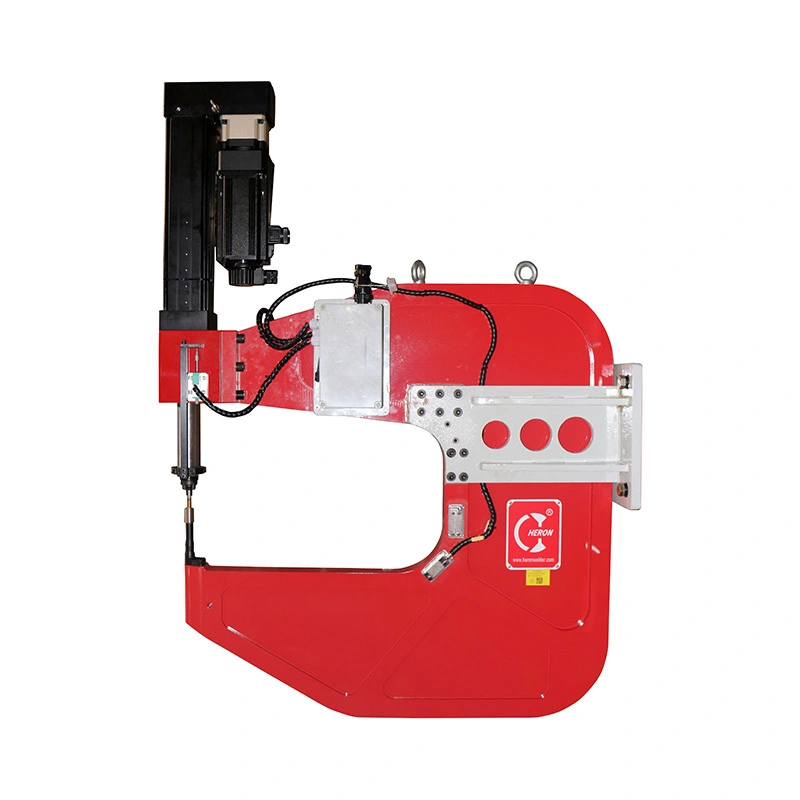
In today’s competitive manufacturing landscape, efficiency, precision, and durability are paramount. Metal-joining processes play a critical role in industries ranging from automotive and aerospace to appliance production and electronics. Among the advanced techniques transforming assembly lines, the clinching machine stands out as a fast, reliable, and cost-effective solution. Heron Welder, a global leader in industrial welding and metal-joining equipment, offers a range of clinching systems designed to meet the demands of modern manufacturing.
What Is a Clinching Machine?
A clinching machine is a specialized metal-joining device that mechanically interlocks two or more sheets of metal without the need for additional fasteners such as screws, rivets, or adhesives. The process relies on localized plastic deformation, where the metal sheets are pressed together under high pressure, forming a secure mechanical joint. Clinching provides a strong, vibration-resistant connection while maintaining the integrity of the surrounding material.
Unlike traditional welding, clinching does not require heat, making it suitable for joining dissimilar metals, coated materials, and lightweight alloys, which are increasingly common in automotive and industrial applications.
Principles of Clinching Technology
Clinching works on a simple but precise principle:
-
Sheet Positioning – The metal sheets are aligned and clamped securely within the machine.
-
Punch and Die Action – A specially shaped punch presses the top sheet into a die beneath the bottom sheet, causing the material to flow and form an interlock.
-
Joint Formation – The punch retracts, leaving a mechanically strong, button-shaped joint that can withstand significant shear and tensile loads.
Heron’s clinching machines are engineered with high-precision punches and dies, ensuring consistent joint quality, minimal sheet distortion, and reduced cycle times for high-volume production lines.
Applications of Clinching Machines
Clinching machines are widely used in industries where lightweight, corrosion-resistant, and high-strength assemblies are required. Key applications include:
-
Automotive Manufacturing – Joining body panels, roof rails, and structural components made from steel or aluminum alloys.
-
Appliance Production – Assembling washing machines, refrigerators, and air-conditioning casings.
-
Electronics and HVAC – Fabricating lightweight enclosures, ventilation ducts, and metal housings.
-
Furniture and Metalwork – Creating frames, cabinets, and other structures where mechanical joints are preferred over welding.
The versatility of clinching allows manufacturers to replace screws, spot welds, or rivets, reducing material costs, assembly time, and environmental impact.
Advantages of Using a Clinching Machine
Implementing clinching technology in manufacturing processes offers several benefits:
-
Non-Heat-Based Joining – Eliminates the risk of thermal distortion, oxidation, or coating damage.
-
High Production Speed – Clinching cycles typically take only a few seconds, ideal for automated production lines.
-
Material Flexibility – Capable of joining dissimilar metals such as aluminum, steel, and coated sheets.
-
Cost-Effective – Reduces labor, fastener costs, and the need for pre-drilled holes.
-
Environmentally Friendly – No filler materials, adhesives, or welding fumes are required.
Heron clinching machines are designed to maximize these advantages, offering repeatable, high-quality joints while supporting lean and sustainable manufacturing practices.
Clinching vs. Spot Welding: Choosing the Right Solution
While both clinching and spot welding are used for sheet metal joining, each method has unique characteristics:
| Feature | Clinching | Spot Welding |
|---|---|---|
| Heat Involved | No | Yes |
| Suitable for Coated/Aluminum Sheets | Excellent | Limited |
| Speed | Fast | Moderate |
| Dissimilar Metals | Yes | Often difficult |
| Joint Strength | High | Very High (but material-specific) |
For manufacturers handling coated or aluminum sheets, or when heat-sensitive components are involved, clinching machines offer a safer, more efficient solution. Heron provides both standalone and integrated clinching systems tailored for production line automation.
Best Practices for Clinching Machine Operation
To ensure optimal performance and joint quality, manufacturers should follow these best practices:
-
Material Selection – Choose compatible sheet thicknesses and alloys.
-
Tool Maintenance – Regularly inspect punches and dies for wear and replace when necessary.
-
Machine Calibration – Set the correct punching force and alignment to prevent incomplete or distorted joints.
-
Automation Integration – For high-volume production, integrate clinching machines into robotic or conveyor-based systems for consistent throughput.
-
Quality Control – Conduct regular tensile and shear tests to validate joint strength and integrity.
Heron’s clinching machines come with advanced control systems, allowing precise adjustment of force, stroke, and speed to match specific production requirements.
Why Choose Heron for Clinching Solutions?
Heron Welder has over decades of expertise in resistance welding, clinching, and automated metal-joining systems. Our clinching machines are engineered for durability, repeatability, and high-speed performance. Whether you need a standalone system for small batches or a fully automated line for mass production, Heron provides:
-
Custom Engineering – Machines tailored to your material types, thicknesses, and production volumes.
-
Global Support – Installation, training, and maintenance services worldwide.
-
Integrated Automation – Seamless connection with robotic arms, conveyors, and control systems.
-
Industry Expertise – Solutions optimized for automotive, appliance, electronics, and general manufacturing sectors.
Frequently Asked Questions (FAQs)
Q1: Can clinching machines join coated or galvanized sheets?
Yes, clinching machines are ideal for coated, galvanized, or painted sheets because the process does not generate heat that could damage the surface.
Q2: What thickness range can a clinching machine handle?
Most industrial clinching machines can join sheets ranging from 0.5 mm to 3 mm, with specific models supporting thicker materials.
Q3: Are clinched joints as strong as welded joints?
Clinched joints provide high shear and tensile strength suitable for most industrial applications, though spot welding may offer slightly higher strength for certain steel assemblies.
Q4: Can clinching machines be integrated into automated production lines?
Absolutely. Heron clinching machines are designed for easy integration with robots, conveyors, and industrial control systems for high-volume automated production.
Q5: How do I maintain a clinching machine for long-term performance?
Regular inspection of punches and dies, proper lubrication, and calibration of machine force and alignment ensure consistent joint quality and machine longevity.
Consultation
Maximize your manufacturing efficiency with Heron clinching machines. Our solutions combine precision engineering, automation readiness, and reliable joint quality to elevate your production processes. Contact Heron today to request a quote or consult with our experts on customized metal-joining and automation solutions tailored to your factory’s needs.

 English
 Arabic
 French
 Spanish
 Portuguese
 Deutsch
 Turkish
 Dutch
Dutch
 Italiano
 Russian
 Romaian
 Portuguese (Brazil)